






Author Interview with Paul Stancliffe and Jeff Baker: The Collins British Bird Identifier
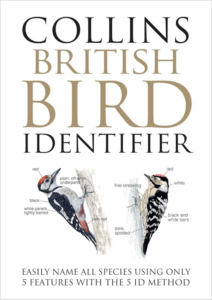 The Collins British Bird Identifier offers a fresh and inventive take on the challenge of bird identification, highlighting the five features that can be used to definitively identify every bird species in Britain. With beautiful new artwork and clear labelling, the guide aims to simplify the process of bird ID and make it accessible and enjoyable for everyone, from beginner to expert.
Collins British Bird Identifier was developed by a team from the British Trust for Ornithology (BTO), comprising Paul Stancliffe, who developed the BTO’s bird identification courses, and Jeff Baker, field guide illustrator and former BTO Marketing Director. We recently had the pleasure of talking to Paul and Jeff about the concept behind the guide and the process of bringing it to life.
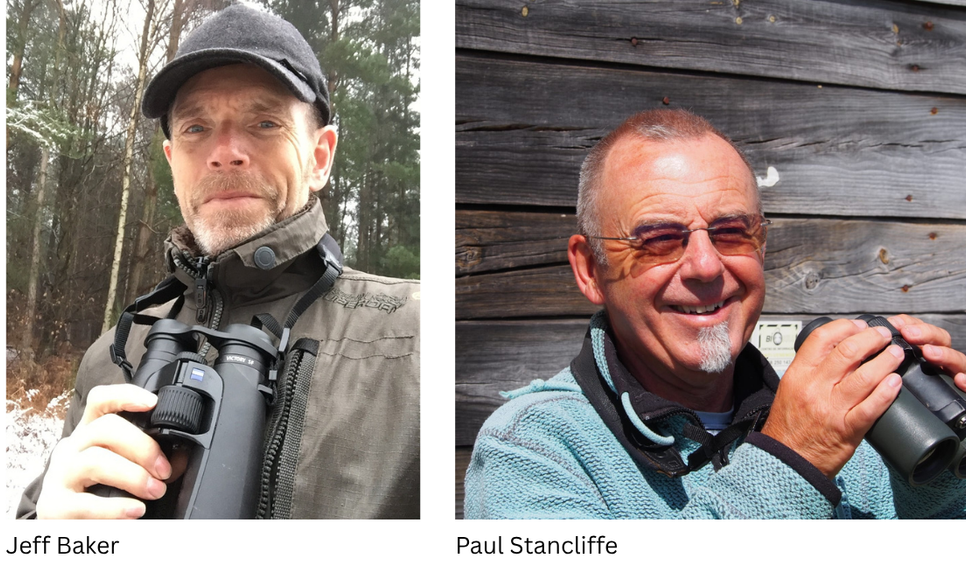
Firstly, how did the two of you come to work together on this project?
Jeff says: Paul worked with me at the BTO for many years. I project managed a couple of Paul’s books – Collins BTO Guide to British Birds and Collins BTO Guide to Rare British Birds. Having worked on these he came up with an idea that perhaps all British species could be identified using just five features.
Paul says: I have kept notes on the identification of tricky species for many years and have often thought that I could share them more widely. Having worked successfully with Collins before they were the obvious publisher to approach once I had checked and double checked that the five features concept worked. I have always liked Jeff’s artwork and for me the choice for him to illustrate this book was an easy one.
The guide gives a novel but very effective take on the challenge of bird identification. How did the idea of the ‘five features’ approach come about?
Paul says: It has taken a lot of time and thought but I think the process began for me with my first ‘proper’ birding notebook over fifty years ago where I noted features that would help me identify birds that I saw if, and when, I saw them again. For some species only one or two but for others more. This approach has served me well and around a decade ago I began looking at how many features were needed to identify a species of bird beyond doubt – five seemed to be the answer and I then began testing this around Europe and the Middle East and during a trip to North America. It worked very well.
Was it difficult to whittle ID features down to five for some species?
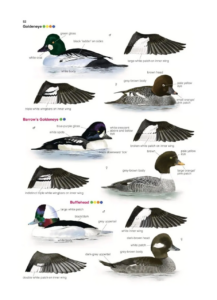
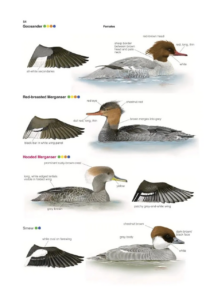
Paul says: Identifying the five features needed took me over a decade of research, mostly in the field though many were already in my notebooks. There are a small number of species where one or two more features may help. Even with those, if the five features given in the book are seen, you can be confident you have the right bird, though that’s not always easy in the field, particularly with secretive and flighty birds.
A bonus of this guide is the inclusion of all birds recorded in Britain, meaning it doubles as a beautifully illustrated checklist of British birds. Were there any challenges in expanding the scope to cover rarer visitors?
Jeff says: Yes, the very rare species, and even scarce species I have not seen, posed more of a challenge when it came to illustrating them. Fortunately, the reference material available today, especially given the vast wealth of photographic libraries as well as identification articles, papers and books, made the task much easier than it would have been say even ten years ago.
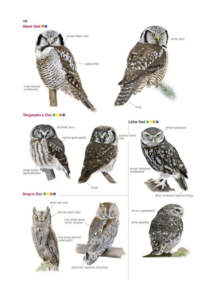
Creating the illustrations, showing not just all species but all distinctive plumages, must have been a monumental task. Can you tell us a bit about the process and timeline?
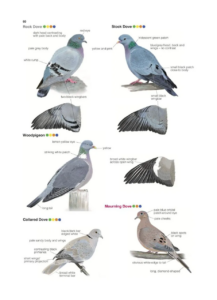
Jeff says: The actual timeline from starting the illustrations for this book to finishing it was about four years. However, this is a bit misleading since a lot of detailed research on non-passerines birds was undertaken at the Tring Natural History Museum over several years to look for ageing and sexing methods using their vast collection of cabinet specimens. This work resulted in a guide to the Identification of European Non-Passerines (BTO Guide). This extensive piece of research work proved crucial for many of the non-passerine illustrations in this book. Also, as a bird ringer for over 55 years, I’ve been privileged to get up close and personal to hundreds of species and thousands of birds handled over the years. It all helps to build up a picture in your head!
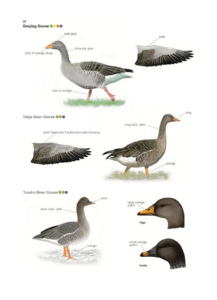
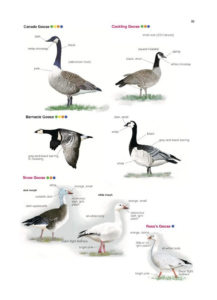
Finally, what are your hopes for this guide in terms of how it will help to improve the identification process for birders, new or experienced?
Paul says: I hope it will give beginners a new approach to bird identification and provide experts with a handy memory jogger, but above all, I hope it will make bird identification less daunting for those just starting out, or thinking of taking up this wonderful hobby. It is not often that the opportunity to share a lifetime of watching and learning about birds with others is given.